
The Science Behind Vitamin D And Its Effects On Skin Aging
- What Is Vitamin D and How Does the Body Produce It?
- Understanding the Skin Aging Process
- The Relationship Between Vitamin D and Skin Cell Function
- How Vitamin D May Help Slow Visible Skin Aging
- Vitamin D, Inflammation, and Age-Related Skin Damage
- What Research Says About Vitamin D and Skin Aging
- Common Causes of Vitamin D Deficiency in the United States
- Best Ways to Maintain Healthy Vitamin D Levels for Skin Health
- Vitamin D Myths and Misconceptions About Skin Aging
- Vitamin D and Healthy Aging: A Holistic Approach to Skin Longevity
What's easy to miss in all the noise around serums and retinoids is the role nutrition plays at a cellular level. Your skin isn't just a surface — it's a living organ that responds to what's happening inside your body. And vitamin D sits at a surprisingly interesting intersection of sunlight, cellular repair, and how gracefully your skin holds up over time. This isn't a piece that promises miracles. But it does break down what the science actually says — and what it doesn't yet — about this fascinating nutrient and how it shows up in your skin's long-term health.
What Is Vitamin D and How Does the Body Produce It?
Most people think of vitamin D as something you get from sunlight and maybe a supplement. That's true, but it's also a simplification. Vitamin D functions more like a hormone than a traditional nutrient — it influences gene expression, cellular behavior, and immune regulation in ways that go well beyond bone health.
The Different Forms of Vitamin D
There are two main forms worth knowing: vitamin D2 (ergocalciferol) and vitamin D3 (cholecalciferol).
| Feature | Vitamin D2 | Vitamin D3 |
|---|---|---|
| Source | Plant-based, fungi | Animal-based, synthesized by skin |
| Absorption | Slightly lower | Generally higher |
| Duration in body | Shorter half-life | Longer-lasting |
| Common in supplements | Yes (often vegan products) | Yes (most mainstream supplements) |
| Recommended for deficiency? | Used clinically | Preferred by most dermatologists |
Honestly, D3 tends to win on most practical measures. It's what your skin naturally produces and what tends to raise blood levels more effectively. That said, D2 isn't useless — it just requires a bit more of it to get the same effect.
How Sunlight Triggers Vitamin D Synthesis
Here's where it gets genuinely interesting. When UVB radiation hits your skin, it converts a cholesterol compound (7-dehydrocholesterol) into previtamin D3. That molecule then travels to the liver, gets converted to 25-hydroxyvitamin D, and eventually reaches the kidneys for final activation into the form your body actually uses. The whole process is elegant — and fragile. Glass blocks UVB. Sunscreen can reduce synthesis. And if you live above roughly 37 degrees latitude (think Chicago or higher), winter sun is too weak to trigger meaningful production for several months each year.
Understanding the Skin Aging Process
Aging skin isn't a single event. It's the accumulation of a thousand small processes, some inevitable, some entirely influenced by daily choices.
Intrinsic Aging vs. Extrinsic Aging
Intrinsic aging is the biological clock ticking on its own — driven by genetics, telomere shortening, and slower cellular turnover. There's a limit to how much you can change this. Extrinsic aging is the story you write yourself, largely through UV exposure, pollution, smoking, sleep habits, and nutrition. This is where vitamin D — and deficiency — becomes particularly relevant.
Key Changes in Aging Skin
As the skin ages, several structural shifts happen:
- Collagen loss begins around your late 20s, accelerating after menopause in women. Collagen gives skin its firmness and bounce.
- Elastin degradation means skin loses its ability to snap back, leading to sagging and deeper lines.
- Reduced skin barrier function compromises moisture retention, making skin look drier and more fragile.
- Fibroblast slowdown means the cells responsible for rebuilding these proteins become less active over time.
None of this is dramatic in any single year. But over a decade, the effects compound.
The Relationship Between Vitamin D and Skin Cell Function
Your skin isn't just a passive recipient of vitamin D — it's actually a major production site for it. And it turns out, skin cells are also highly responsive to it.
Vitamin D Receptors in the Skin
The vitamin D receptor (VDR) is found throughout the skin — in keratinocytes (the cells that form the outer layer), in fibroblasts (deep in the dermis), and in immune cells. This distribution matters because it means vitamin D can influence multiple layers of skin biology simultaneously. VDR expression actually declines with age, which is one reason why older adults both produce less vitamin D from sun exposure and may respond less efficiently to the vitamin D they do get.
Regulation of Skin Cell Growth and Repair
Vitamin D plays a direct role in keratinocyte differentiation — essentially, the process by which new skin cells mature, migrate to the surface, and maintain the integrity of the skin barrier. When this process is disrupted, skin can become thinner, more reactive, and slower to heal. Research also suggests vitamin D supports tissue regeneration after damage, which may partly explain why deficiency tends to correlate with slower wound healing and increased skin sensitivity.
How Vitamin D May Help Slow Visible Skin Aging
This is where the science gets nuanced — and where it's worth being careful about overclaiming.
Supporting Collagen Production
Vitamin D appears to influence the expression of genes related to collagen synthesis. Some in vitro studies have shown that vitamin D can stimulate fibroblast activity and collagen production in skin tissue. Whether this translates cleanly to measurable anti-aging effects in humans is still being studied, but the biological pathway is plausible.
Reducing Oxidative Stress
Free radicals — generated by UV exposure, pollution, and normal metabolic processes — are a primary driver of extrinsic aging. Vitamin D has demonstrated antioxidant-like properties in some studies, helping to modulate the cellular response to oxidative damage. Think of it less like a shield and more like a system that helps your cells recover faster after the damage occurs.
Supporting Skin Hydration
The skin barrier depends heavily on lipid structure and protein regulation — both influenced by VDR signaling. When vitamin D levels are adequate, barrier integrity tends to be better maintained, which in practice means skin holds moisture more efficiently. For aging skin, where barrier function naturally declines, this is more than cosmetic.
Vitamin D, Inflammation, and Age-Related Skin Damage
The concept of "inflammaging" — chronic low-grade inflammation that accelerates biological aging — has gotten significant attention in recent years. And vitamin D sits at a meaningful intersection with this process.
Chronic Inflammation and Premature Aging
Persistently elevated inflammatory cytokines break down collagen, impair skin repair, and accelerate the visible signs of aging. This is a slower process than a sunburn, but potentially more damaging over decades.
Immune System Regulation
Vitamin D has well-documented immunomodulatory effects — it can suppress excessive inflammatory responses while supporting the skin's natural defense mechanisms. In the context of skin aging, this regulation may help reduce the chronic low-level inflammation that quietly degrades skin structure over time.
What Research Says About Vitamin D and Skin Aging
Here's the honest picture: the research is promising, but not yet definitive.
Human Studies and Clinical Evidence
Several observational studies have found associations between higher vitamin D levels and better skin elasticity, reduced wrinkle depth, and slower visual aging — particularly in postmenopausal women. A few clinical trials have explored topical vitamin D analogs for skin conditions with mixed results. The challenge is that many of these studies are observational, meaning they show correlation rather than causation. People with higher vitamin D levels also tend to have healthier overall lifestyles, which makes it hard to isolate vitamin D's specific contribution.
Areas Requiring Further Investigation
Long-term randomized controlled trials on vitamin D and skin aging are still limited. Researchers are also working to establish what "optimal" vitamin D levels actually look like for skin health — the current general threshold for sufficiency (30 ng/mL serum 25-hydroxyvitamin D) may not be the ideal target for dermatological outcomes specifically. This is an area where the science is genuinely still developing.
Common Causes of Vitamin D Deficiency in the United States
According to the CDC, vitamin D deficiency remains surprisingly widespread in the U.S. — affecting roughly 40% of adults at some level of inadequacy.
Indoor Lifestyles and Screen Time
The average American spends roughly 90% of their time indoors. That alone dramatically limits the sunlight-driven synthesis pathway, regardless of geographic location.
Geographic and Seasonal Factors
If you live in the northern half of the country — think Minnesota, Michigan, or the Pacific Northwest — meaningful UVB exposure drops to near zero between roughly November and March. Even in sunnier states, daily routines often mean most outdoor time happens when UVB is low (early morning, late afternoon).
Higher-Risk Populations
Older adults produce vitamin D less efficiently from sun exposure due to reduced skin thickness and lower 7-dehydrocholesterol levels. Individuals with darker skin tones require significantly more sun exposure to produce equivalent amounts of vitamin D due to higher melanin levels, which filters UVB. These are structural vulnerabilities in the current public health landscape, not personal failures.
Best Ways to Maintain Healthy Vitamin D Levels for Skin Health
Getting enough vitamin D in the U.S. context takes a bit of intentionality — it's not something most people hit naturally without thinking about it.
Dietary Sources of Vitamin D
Food sources are limited but meaningful:
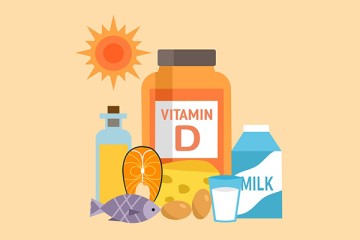
- Fatty fish (salmon, sardines, mackerel) — among the highest natural sources, with a 3-oz serving of salmon providing roughly 450-600 IU
- Fortified milk — most U.S. dairy milk is fortified with around 100 IU per cup
- Fortified orange juice — a convenient option for non-dairy households
- Egg yolks — modest amounts, but they add up
- Fortified cereals — varies widely by brand
Safe Sun Exposure Practices
Somewhere between 10 and 30 minutes of midday sun on arms and legs several times a week is often cited as a reasonable target for lighter-skinned individuals. Darker skin tones may need longer. The nuance is in balancing this against photoaging and skin cancer risk — which means not abandoning sunscreen entirely, but perhaps being strategic about brief unprotected exposure before applying it.
Vitamin D Supplements
For many Americans — especially those in northern states, older adults, or those with limited sun exposure — supplementation makes practical sense. Nature Made Vitamin D3 and Nordic Naturals Vitamin D are two widely available and well-regarded options. Costco's store-brand D3 softgels also represent solid value for daily maintenance. Most adults in the general population do well with 1,000–2,000 IU daily, though individual needs vary and blood testing gives the clearest picture. It's worth noting that similar logic applies in adjacent wellness categories. Height growth supplements, for instance, have drawn interest as people become more aware of how nutritional gaps — including vitamin D deficiency during developmental years — can quietly affect bone and tissue health. When approached thoughtfully and with realistic expectations, targeted supplementation can be a meaningful part of a broader health strategy.
Vitamin D Myths and Misconceptions About Skin Aging
A few persistent misunderstandings are worth clearing up.
More Sun Does Not Always Mean Healthier Skin
This one trips people up often. Yes, sunlight triggers vitamin D synthesis. But unprotected sun exposure is also the primary driver of photoaging — the extrinsic aging caused by UV damage. Wrinkles, hyperpigmentation, and loss of elasticity are largely a sun story. More sun rarely equals younger-looking skin.
Supplements Are Not a Miracle Anti-Aging Solution
Correcting a vitamin D deficiency can restore normal cellular function — and that matters. But taking high-dose supplements when you're already sufficient doesn't produce linear anti-aging benefits. More isn't more here.
Vitamin D Is One Part of a Larger Skin Health Strategy
This deserves more weight than it usually gets. Sleep quality, stress management, hydration, diet, and consistent sun protection all contribute to how your skin ages. Vitamin D fits into that picture — meaningfully — but it doesn't replace the other pieces.
Vitamin D and Healthy Aging: A Holistic Approach to Skin Longevity
Putting all of this together, the most useful frame isn't "vitamin D is an anti-aging nutrient" — it's more like "vitamin D is one system among many that keeps your skin functioning the way it's supposed to."
Combining Nutrition and Skincare
Evidence-based skincare (retinoids, SPF, antioxidant serums) works at the surface. Nutrition — including adequate vitamin D — works at the cellular level. These aren't competing strategies. They're complementary ones.
Lifestyle Habits That Support Youthful Skin
The research on healthy aging consistently points toward the same cluster of habits:
- Physical activity supports circulation and collagen turnover
- Sleep quality is when cellular repair actually happens
- Stress management reduces cortisol's degrading effects on skin structure
- A varied, nutrient-rich diet — something like a Mediterranean-style pattern — provides the antioxidants, healthy fats, and micronutrients skin needs to maintain itself
Vitamin D is threaded through several of these systems. Getting it right won't reverse a decade of sun damage, but staying deficient definitely doesn't help. The honest takeaway here is that vitamin D matters more to your skin than most people give it credit for — and most Americans aren't getting enough of it. The science doesn't support wild anti-aging claims, but it does support the quieter, more important idea: that your skin ages better when it has what it needs to do its job. And vitamin D is very much part of what it needs. Getting your levels tested is a reasonable starting point. Going from there — whether through diet, smart sun habits, or a quality supplement — is the kind of low-effort, high-value move that tends to pay off over the long term.